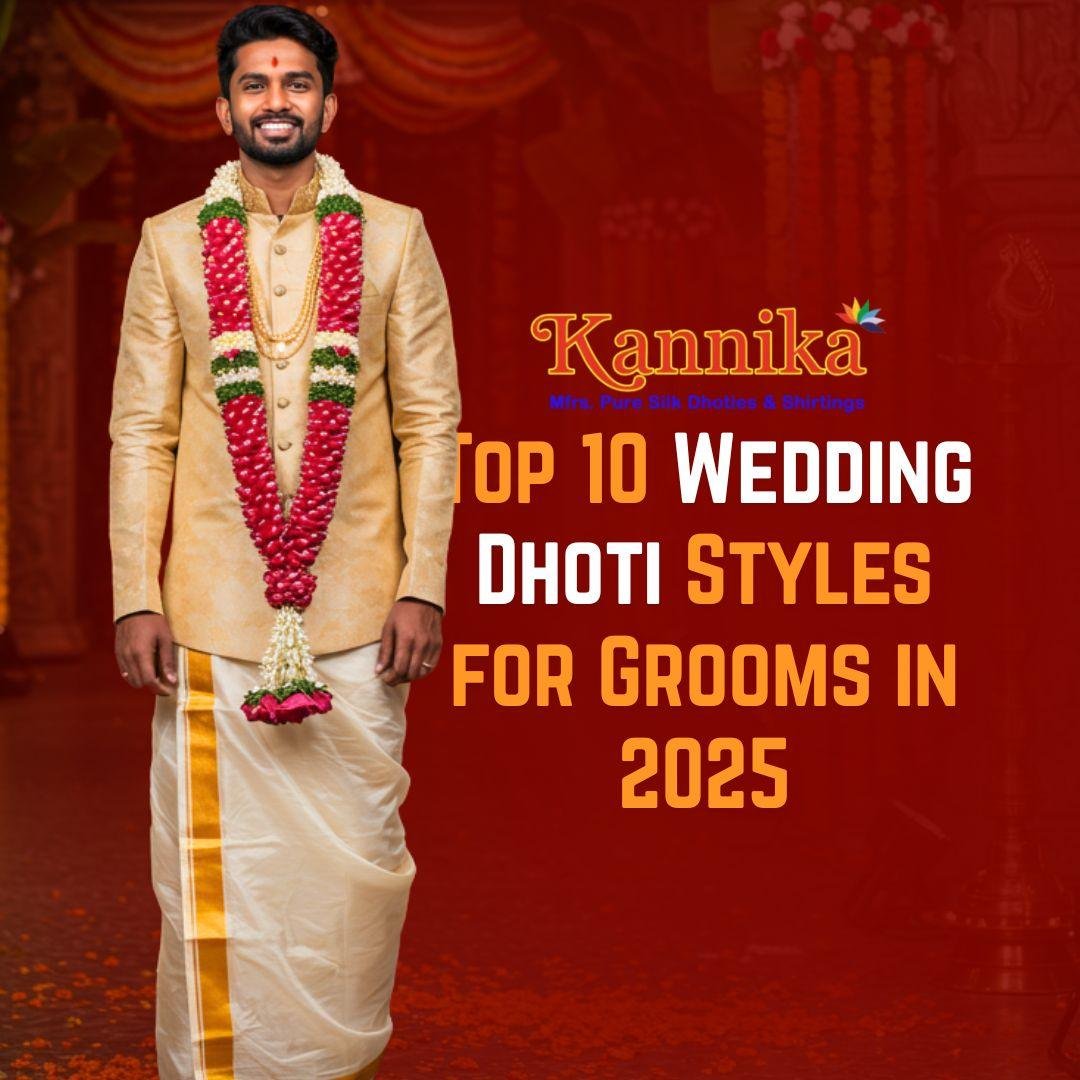
Last month, I attended my cousin Arjun’s wedding in Chennai, and I was blown away by how traditional dhotis have evolved. Growing up watching my father and grandfather wear simple white dhotis for special occasions, I never imagined there could be so many stunning variations!
If you’re planning your wedding or just want to look sharp as a guest, these dhoti styles will help you balance tradition and today’s fashion. Let me share what I’ve learned from talking with local tailors, designers, and countless hours spent at family weddings across India.
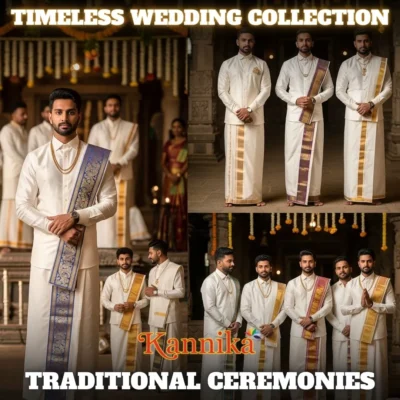
Kanjivaram Silk Dhoti – The Timeless Classic
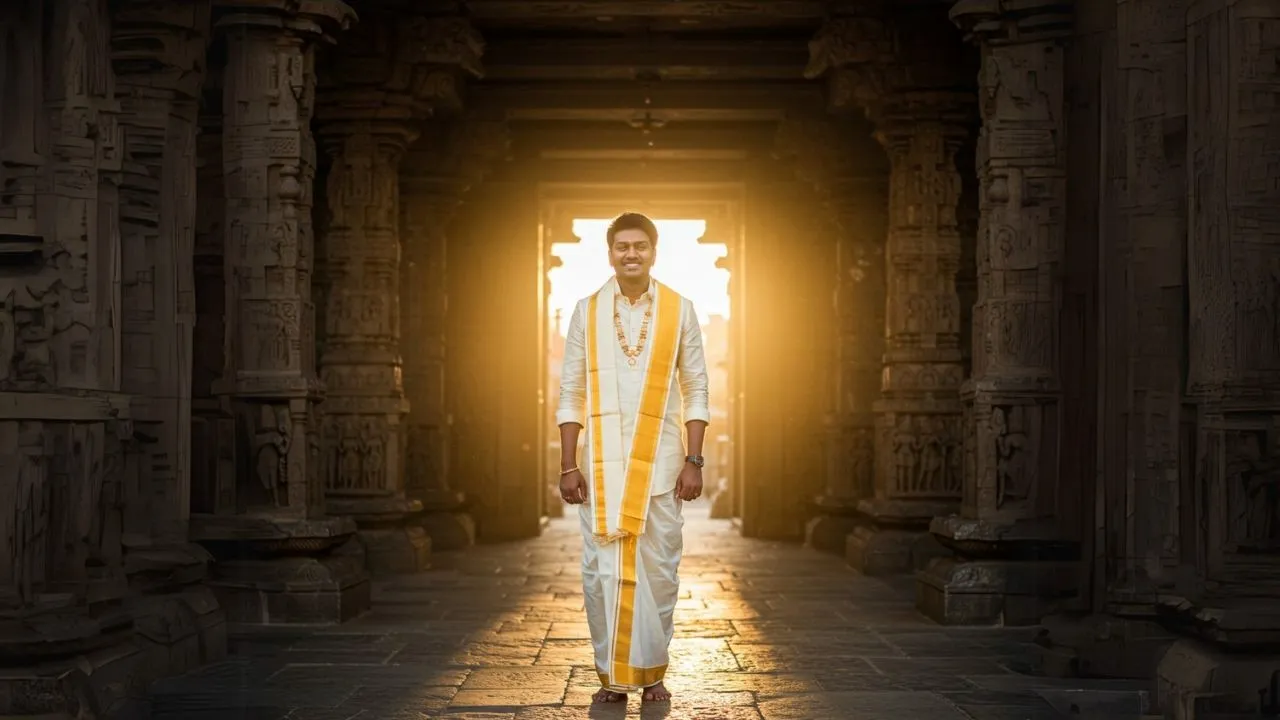
Nothing says “South Indian wedding” quite like a Kanjivaram silk dhoti. My uncle spent three hours at RmKV in Chennai helping me select one with the right zari weight for my cousin’s wedding.
What makes them special:
- The silk is so heavyweight it practically stands on its own (and yes, it’s hot—bring a handkerchief!)
- Those gold borders aren’t just for show—wider borders (2-4 inches) are considered more prestigious
- Traditional temple designs along the border tell stories from Hindu mythology
- Best colors? Pure white for ceremonies, cream or light gold for receptions
- Styling tip from Mr. Venkatesh at Chennai Silks: “Always match the angavastram (shoulder cloth) exactly—mismatched borders are a dead giveaway that you bought them separately!”
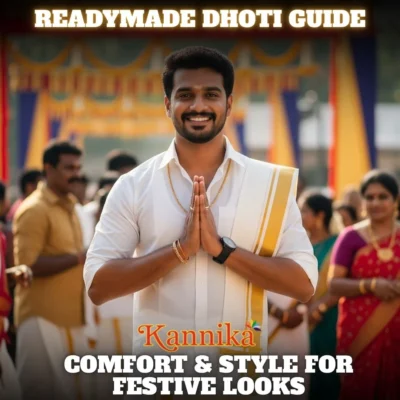
Pre-Stitched Dhotis – No More Draping Disasters!

After watching my brother-in-law frantically YouTube “how to tie a dhoti” 20 minutes before a wedding, I’m now a huge fan of pre-stitched options.
What you’ll love:
- No embarrassing mid-ceremony “wardrobe malfunctions” (we’ve all seen it happen!)
- Hidden velcro and drawstring closures that nobody will notice
- The pleats stay perfect all day—even through hours of sitting and standing for rituals
- Available in everything from raw silk to comfortable cotton blends
A wedding planner friend, Priya, told me that nearly 70% of her Bangalore clients now opt for pre-stitched dhotis—especially grooms living abroad who haven’t grown up wearing them.
Dhoti Pants – Where Tradition Meets Practicality
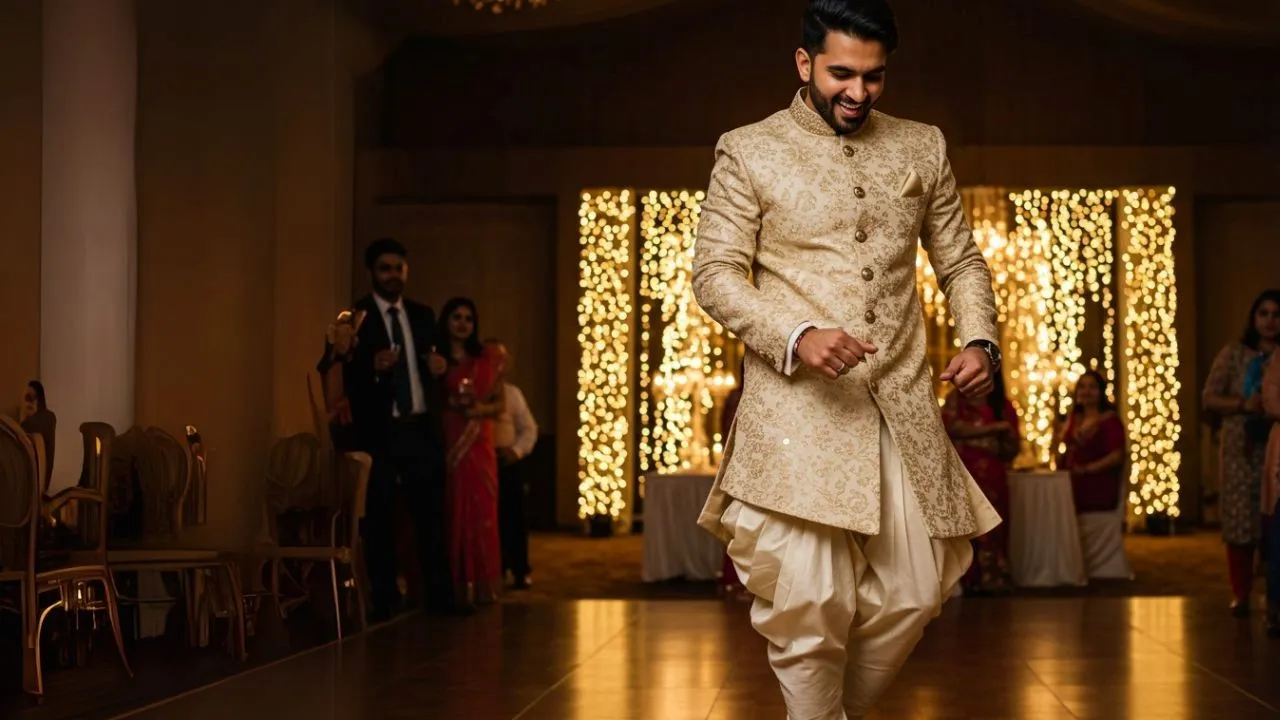
Last year at my friend Karthik’s fusion wedding in Mumbai, he wore dhoti pants that looked traditional in photos but let him dance comfortably at the reception.
What makes them work:
- They give you the distinguished pleated front look without any draping skills
- The tapered bottom makes them perfect for showing off designer shoes
- You’ll find them in luxurious fabrics like dupion silk and even brocade
- Most come with pockets (yes, actual pockets!)
Real experience: My cousin paid ₹12,000 at Manyavar for a premium silk dhoti pant last year, but my local tailor in Pune made me a nearly identical one for half the price.
Regional Styles That Honor Your Heritage
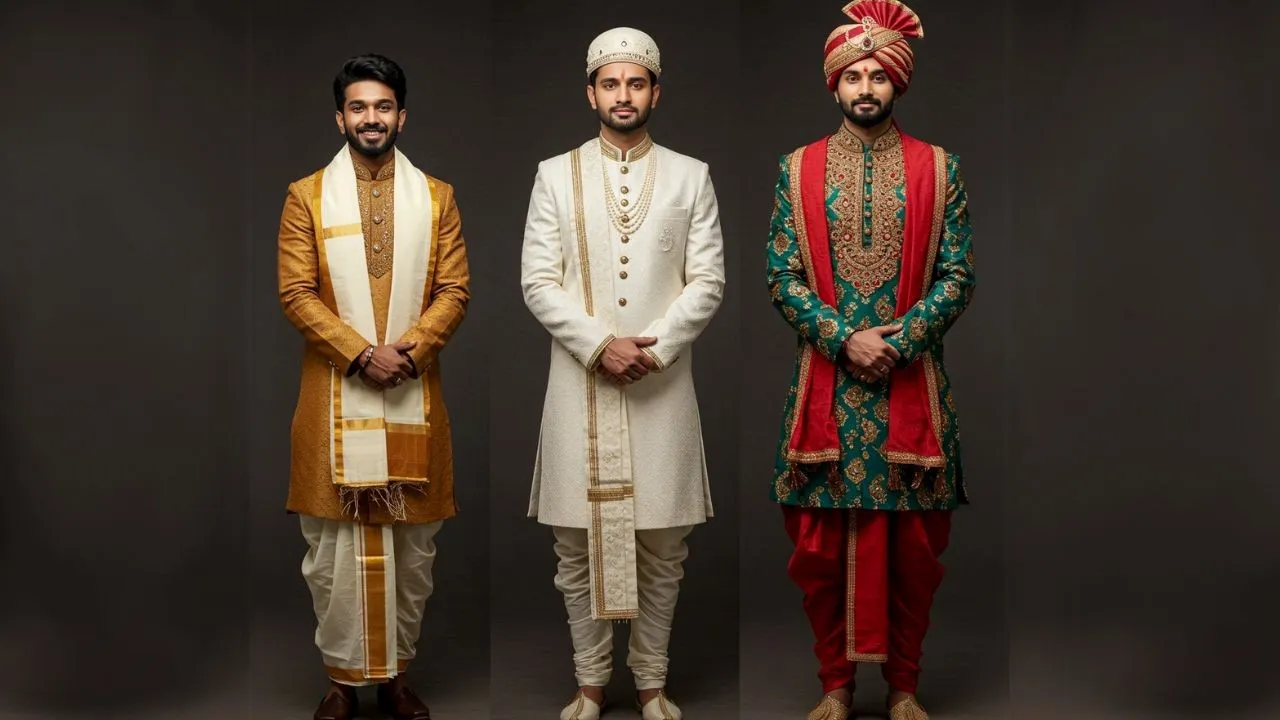
During my travels photographing weddings across India, I’ve noticed more grooms embracing regional styles that connect them to their family roots.
South Indian Pattu Veshti
My Tamil friend Shankar’s wedding featured a stunning cream pattu veshti with a 4-inch gold border that his mother insisted was “the only acceptable option” for the ceremony.
- The gold border (kara) should be visible even when seated
- Many families have specific traditions about border width and placement
- Costs range from ₹5,000 for decent quality to ₹30,000+ for heirloom-quality pieces
- Always paired with a matching angavastram draped over the shoulder
Bengali Dhuti
At a beautiful Bengali wedding in Kolkata last season, I noticed the groom’s dhuti had subtle differences:
- The pleats are arranged differently—more volume at the front
- Borders are typically more understated than South Indian styles
- Traditional white with very fine borders is still preferred for the main ceremony
- The “topor” headwear is often considered more important than the dhuti itself!
Gujarati Style
My colleague Nikhil demonstrated the distinctive Gujarati style at his Vadodara wedding:
- The front pleats are drawn between the legs and tucked at the back
- Brighter colors and more embellishment than other regional styles
- Often worn with a heavily embroidered kurta
- Frequently paired with a colorful bandhani dupatta
Banarasi Dhoti – Royal Splendor
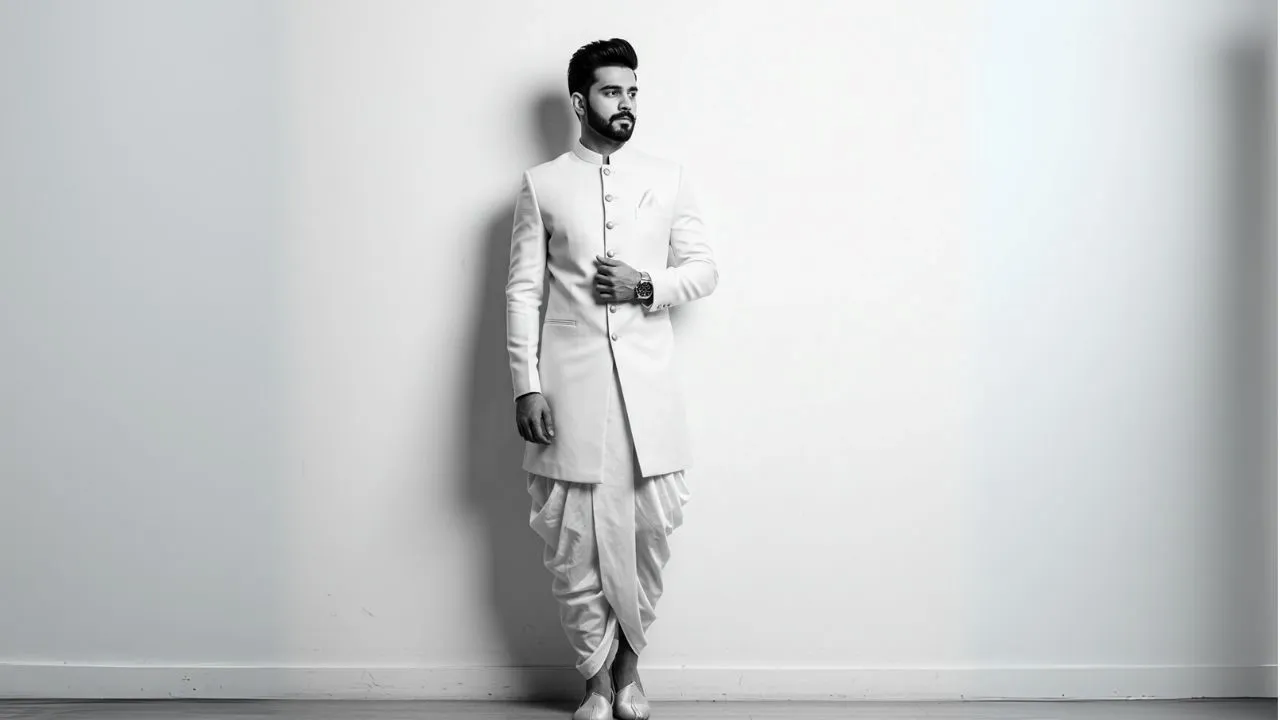
When my friend Rajesh married into a traditional UP family, his in-laws gifted him a stunning Banarasi dhoti that made him look like royalty.
What makes it special:
- The signature brocade work adds weight that creates a magnificent drape
- Real zari work catches the light during evening ceremonies
- Deep jewel tones like maroon and emerald green photograph beautifully
- Typically costs between ₹9,000-₹25,000 depending on the intricacy
“The weight of a good Banarasi dhoti makes all the difference,” said Mr. Sharma at Kashi Silk House in Varanasi. “If it feels too light, the zari is probably synthetic.”
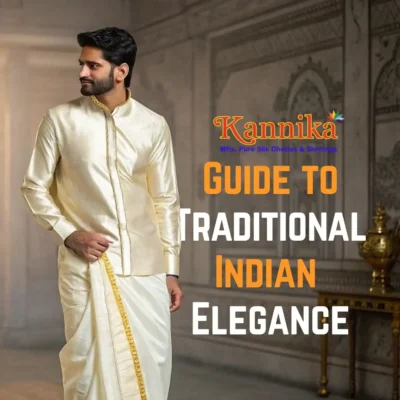
Minimalist Monochrome – For the Modern Groom
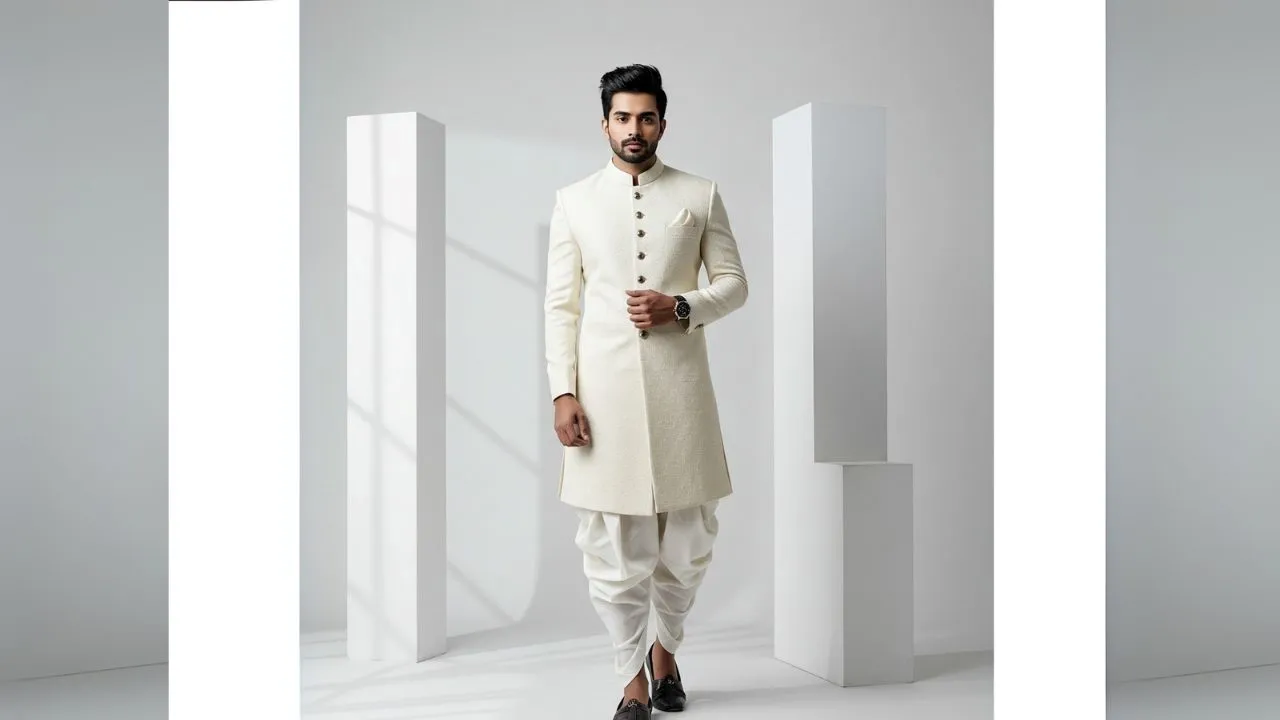
At a stylish Delhi wedding last month, the groom wore a sophisticated all-ivory dhoti ensemble that turned heads.
Why it works:
- Creates a sleek silhouette that looks contemporary yet respectful
- Perfect for grooms who find traditional styles too ornate
- Easier to pair with designer accessories and statement watches
- Photographs beautifully in both color and black-and-white shots
My photographer friend Aditya tells me, “Monochrome dhotis are a dream to shoot—they create a timeless look that won’t appear dated in wedding albums 20 years from now.”
Embroidered Luxury Dhotis – The Showstoppers
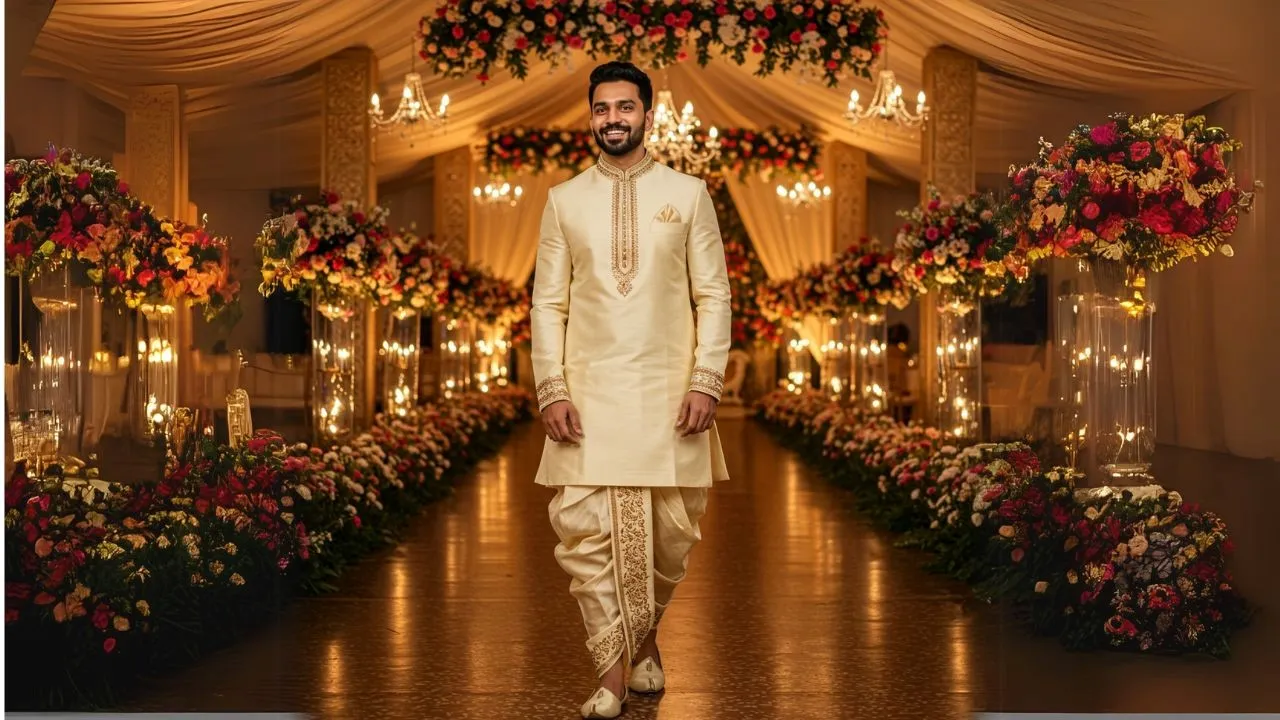
I recently witnessed a groom wearing a dhoti with subtle zardozi embroidery along the borders that elevated the entire look.
What to know:
- Hand embroidery can add 3-4 weeks to your order time, so plan ahead!
- Prices start around ₹15,000 and can go up to ₹50,000 for extensive work
- The weight of the embroidery actually helps the dhoti drape better
- Heavy embroidery needs professional cleaning after the event
Designer tip: Amrita from Bhopal Wedding Studio suggests, “Keep your kurta simple when wearing an embellished dhoti—two statement pieces compete for attention.”
Linen and Cotton Blend Dhotis – Summer Wedding Saviors

After sweating through my silk dhoti at a May afternoon wedding in Chennai, I’ve become an evangelist for lightweight options.
Why you’ll thank me:
- Breathable fabrics that won’t leave you overheating during outdoor ceremonies
- Natural textures that still look refined in photos
- More comfortable for lengthy ceremonies (my cousin’s wedding lasted 4+ hours!)
- Practical enough to be reworn for other formal occasions
Personal experience: I paid ₹7,500 for a handwoven cotton-linen blend dhoti from Fabindia that I’ve worn to three weddings now. The cotton gets softer with each wash while maintaining its elegant appearance.
The Well-Accessorized Dhoti – Details Make the Difference
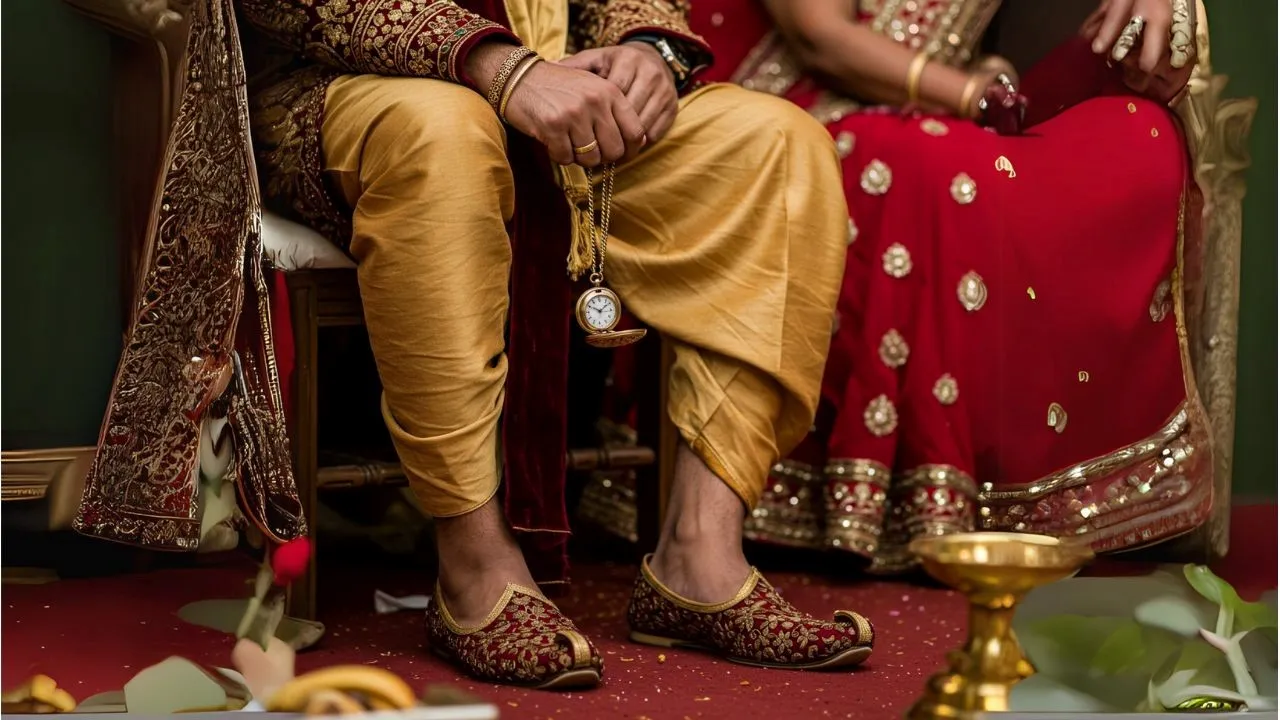
My uncle always says, “A dhoti without proper accessories is like serving biryani without raita!” Here’s what completes the look:
Essential accessories:
- A traditional kamarbandh (waistband) helps secure the dhoti while adding visual interest
- Hand-crafted mojaris with subtle embroidery (expect to pay ₹2,000-₹4,000 for good quality)
- Regional headwear varies dramatically—from simple turbans to elaborate structured designs
- Small details like a vintage pocket watch or heirloom brooch make the look unique
When my brother got married, our grandmother gave him our grandfather’s gold waist chain to wear with his dhoti—a beautiful tradition worth continuing.
Flexi-Fit Innovations – Comfort Meets Tradition
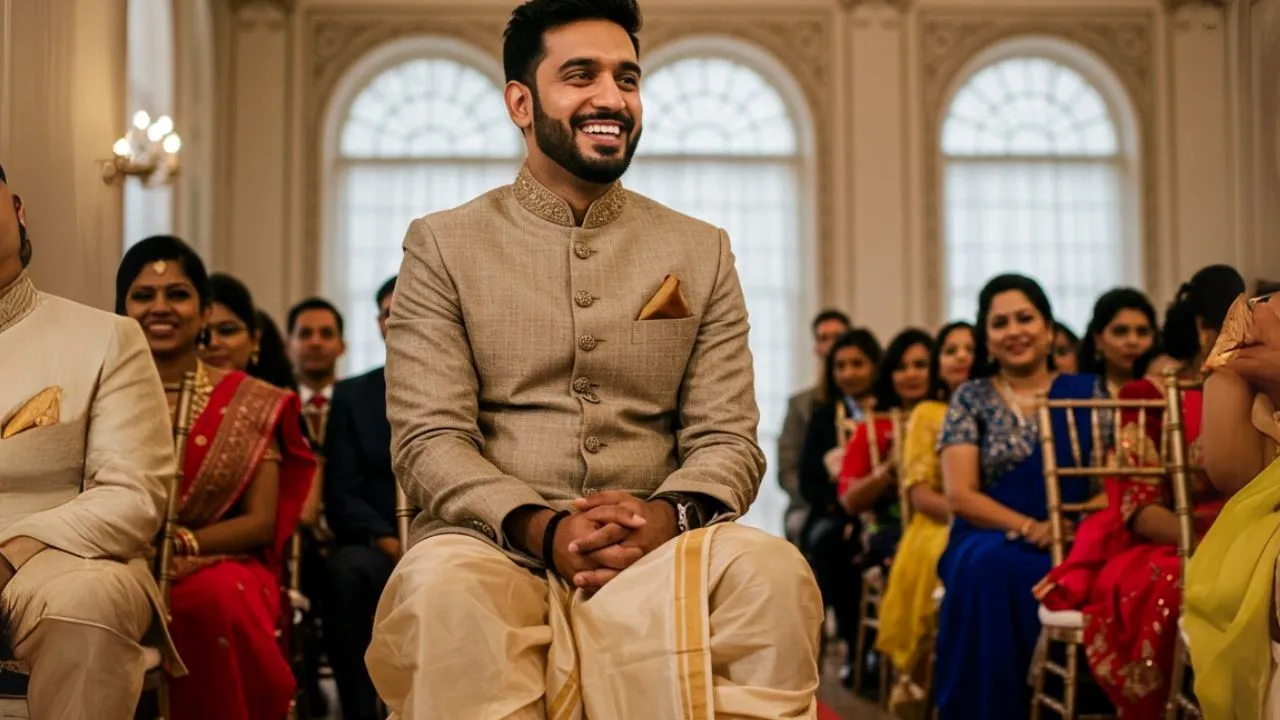
After watching countless grooms fidgeting with their dhotis during ceremonies, designers have finally addressed comfort concerns.
Smart features to look for:
- Partially elasticated waistbands that expand after that heavy wedding meal
- Hook-and-eye closures replace complicated knots
- Strategic pleating that allows you to sit comfortably for hours
- Modified cuts that prevent the front pleats from separating during rituals
My tailor in Bangalore confided, “Most of my grooms secretly request these modifications, but nobody needs to know—they still look completely traditional!”
Finding Your Perfect Wedding Dhoti
When shopping for your wedding dhoti, consider bringing an older family member who knows the traditions—they’ll notice details that you might miss. Most of my friends who attempted to buy their wedding dhoti alone ended up with something that raised eyebrows from the elders.
Different ceremonies within the wedding may call for different styles. My cousin changed from a traditional white silk dhoti for the main ceremony to a more comfortable dhoti pant for the reception.
Remember that alterations can make all the difference—my perfectly fitting dhoti was originally too long until a skilled tailor adjusted it just two days before the wedding.
What dhoti style appeals to you most? Have you worn any of these styles to weddings? I’d love to hear about your experiences in the comments!